Every summer, thousands of individuals across the world take to the water to enjoy the season. Whether it’s a peaceful paddle, an exhilarating speedboat ride, a day of fishing with the family or swimming, water adds enjoyment to our day. There’s something about the fresh air, the open water, and the freedom that comes with exploring lakes and rivers. It’s a part of who we are. But along with that love comes a deep respect for the water and an unwavering commitment to safety. That commitment became even more personal for me during a time in my recovery. After being injured in a horrific motor vehicle crash that was caused by a distracted driver, it took me well over a year to feel truly comfortable on a boat again. Getting back on the water wasn’t just about healing physically—it was about rebuilding trust, confidence, and awareness. That experience reminded me just how quickly things can change, and how important it is to never take safety for granted.
Boating Can Lead to Tragedy
Sadly, we were reminded of this. Recently, in Muskoka, a 22-year-old man was swimming when he was struck by a boat driven by someone under the influence. A moment of recklessness has shattered lives. It’s heartbreaking and infuriating. Incidents like this are entirely preventable. Boating and alcohol do not mix. Impaired operation of a vessel is just as dangerous, just as illegal, and just as deadly as impaired driving on the road. The water can be unpredictable, and the responsibility of operating a boat should never be taken lightly.
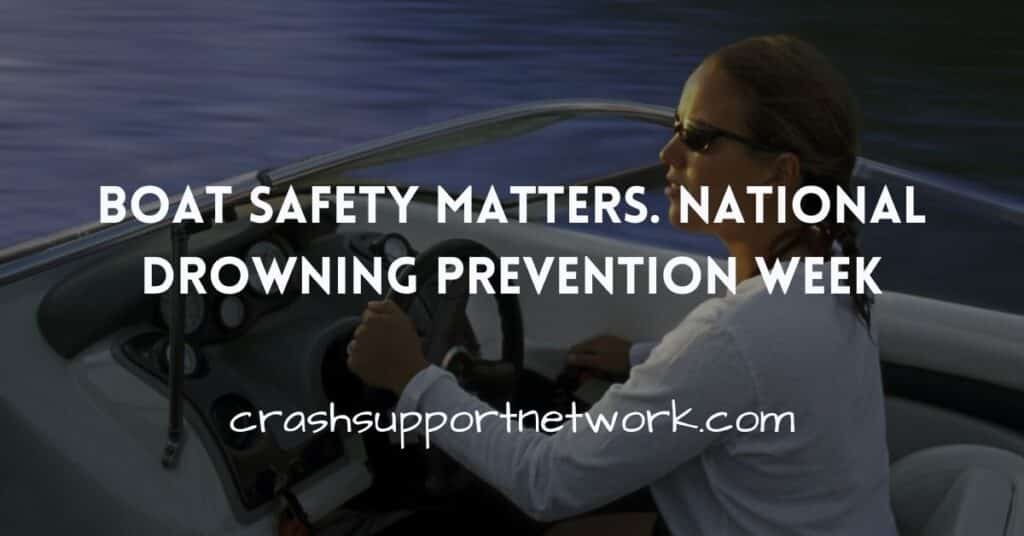
But every summer brings heartbreaking headlines of crashes that could have been prevented. From July 20th-26th, we observe National Drowning Prevention Week, a campaign led by organizations like the Lifesaving Society to raise awareness about water-related risks and promote lifesaving education. This year’s theme is “Safer Together,” a powerful reminder that water safety is a shared responsibility. At the Crash Support Network, we’re joining in to shine a spotlight on National Drowning Prevention Week. As an organization rooted in recovery, resilience, and awareness after serious crashes, we know how quickly a moment can turn into a life-altering event. Boating should be joyful and safe, not tragic.
Boat Safety is Extremely Important
At the Crash Support Network, we’re committed to promoting safety across all transportation and recreational activities. While we often focus on road trauma, it’s equally important to recognize that drowning remains one of the leading causes of death. According to the World Health Organization, drowning is the third leading cause of injury death worldwide, with an estimated 300,000 deaths annually. In Canada alone, The Government of Canada reported in 2020 that 323 people died due to unintentional drownings. These numbers aren’t just statistics. They represent real families, real communities, and real loss.
Whether you’re a seasoned boater or just starting out, following a few key guidelines can make all the difference. These 8 Golden Rules of Boating Safety are must-knows for anyone who loves spending time on the water.
Golden Rules of Boating Safety
Wear Your Lifejacket Properly – A lifejacket won’t help if it’s stowed under a seat or not fastened. Choose one that fits snugly and is approved by Transport Canada or the U.S. Coast Guard.
Stay Sober on the Water – Alcohol is a leading factor in fatal boat crashes. Even one drink can impair coordination and judgment, especially under the sun and heat.
Learn the Local Laws – Boating regulations vary by province or state. Know the speed limits, licensing requirements, and right-of-way rules before you launch.
Do a Pre-Departure Safety Check – Inspect your boat. Check for fuel, flares, fire extinguishers, and emergency supplies. Don’t forget a whistle or horn, and navigation lights if you’ll be out past sunset.
Be Weather-Wise – Conditions can change quickly. Cancel your trip if storms, high winds, or fog are in the forecast. Safety is always more important than a schedule.
Supervise Children Closely -Kids under 12 should always wear a properly fitted lifejacket when on or near the water. Never leave children unattended as drowning can happen silently and in seconds.
Boating Safety Course is Not Optional -Operating a boat isn’t just about steering and throttling—it’s a serious responsibility, and in most places, it’s also the law. In Canada, anyone operating a motorized boat must carry proof of competency, usually in the form of a Pleasure Craft Operator Card (PCOC). This card is obtained by successfully completing a Transport Canada-approved boating safety course. In the United States, boating laws vary by state, but most require a boating education course and license for operators—especially youth and anyone handling a personal watercraft (like a Jet Ski).
Stay Alert on the Water – Looking at your phone, adjusting music, chatting without paying attention to your surroundings—these things may seem harmless in the moment, but they can lead to disaster in seconds. Boats don’t have brakes, and the water is full of unpredictable factors: other vessels, swimmers, rocks, weather. You have to stay focused.
This week is an opportunity not just for reflection but also for action. Whether you’re a frequent boater or heading out for the first time this season, take the time to review safety measures with your family and friends, and encourage others to do the same. The water is a place of freedom, but that freedom comes with responsibility. Every time you launch your boat, we need to remind boaters to: stay safe, stay sober, and don’t boat distracted.
The lakes and rivers we love are shared spaces. Let’s protect them and each other by boating responsibly. If we all do our part, we can enjoy the water safely and ensure that tragic stories like the recent one in Muskoka become far less common. We support safety on every surface—roads, trails, and waterways. Join us in making this summer a safer one for all by staying alert, sober and afloat.
S. Dawne McKay is a survivor of a horrific crash that changed her life forever. Dawne shares her personal journey as a Crash Survivor Blogger and also collaborates with crash survivors as Guest Bloggers allowing them an opportunity to share their stories. Dawne is also the author of the book, “Talk Crash to Me – What to Expect After Surviving a Collision and How to Manage Your Recovery” which is available for purchase on Amazon.
The Crash Support Network is a truly unique platform that brings together survivor-focused support and road safety education in one accessible space. Created for individuals and families affected by motor vehicle collisions, it offers online support groups, a crash survivor blog, a quarterly newsletter “ Sharing Our Recovery,” and a growing library of informative articles. Built on a foundation of connection and compassion while amplifying the importance of road safety, the Crash Support Network goes beyond a website; it’s a community united around support, education and making our roads safer for everyone.