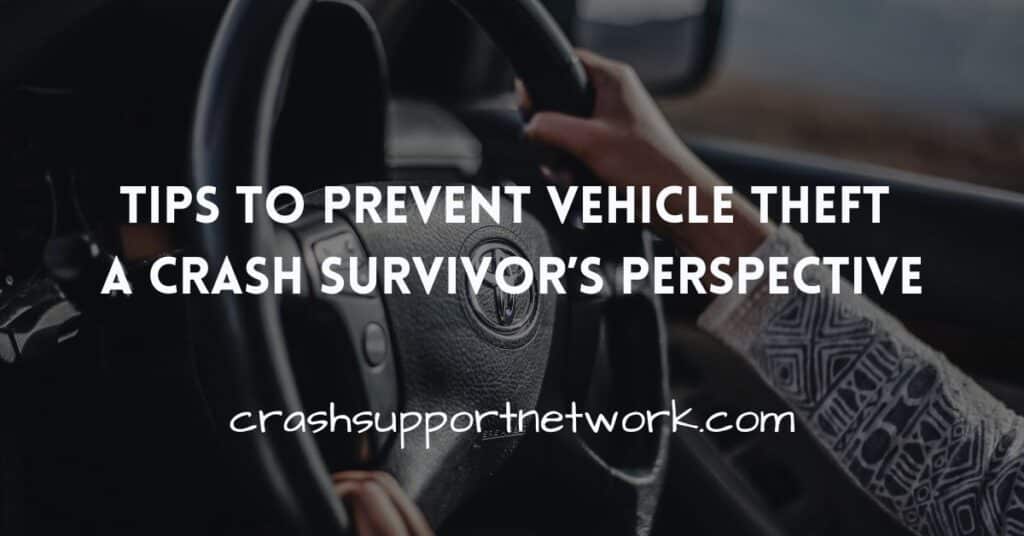
A vehicle is more than four wheels and an engine. For many of us, our vehicle represents freedom. It gets us to medical appointments, therapy sessions, work, family gatherings, and the everyday moments that help us rebuild our lives after being involved in a motor vehicle crash. As a crash survivor, I understand that recovery is not just about healing physical injuries. It’s about finding confidence again, regaining independence, and learning how to navigate a world that can suddenly feel uncertain. That is why the thought of losing your vehicle to theft can feel especially unsettling. After experiencing the trauma of a crash, another unexpected event like having your vehicle stolen can create another layer of stress, anxiety, and disruption. While we cannot control every action of others, there are steps we can take to reduce the risk of vehicle theft and protect something that plays such an important role in our daily lives.
Vehicle theft continues to impact communities everywhere. Thieves often look for easy opportunities, and simple habits can make a significant difference. Taking a few extra moments before walking away from your vehicle can help reduce the chances of becoming a victim. Vehicle theft is a reality and prevention matters. Here are some tips to help protect your vehicle.
Lock Your Vehicle Every Time
It seems simple, but unlocked vehicles remain an easy target for thieves. Make locking your vehicle part of your routine. Those extra few seconds could save you from the stress and disruption of dealing with a stolen vehicle.
Whether you are:
- Running into a store for a quick purchase
- Dropping something off at a friend’s home
- Stopping at a gas station
- Leaving your vehicle outside overnight
An Open Window Is an Open Invitation to Vehicle Theft
Never leave your vehicle unattended with the windows open even for a quick stop. An open window can make it easier for someone to access your vehicle and your belongings. Lock your doors, close your windows, and take your keys with you. A few seconds can make a difference.
Do Not Leave Your Key Fob in Your Vehicle
Leaving keys inside your vehicle even briefly can create an opportunity for theft. For vehicles with push-button ignition, consider storing your key fob in a signal-blocking pouch or container when you are at home. Always avoid:
- Leaving your vehicle running while unattended
- Leaving spare keys inside the vehicle
- Keeping your key fob near doors or windows where thieves may be able to capture its signal
Be Mindful of Where You Park
Your parking choices can play a role in vehicle security. If you are recovering from a crash and already managing appointments, fatigue, or mobility challenges, planning ahead for safer parking can provide additional peace of mind. Whenever possible:
- Park in well-lit areas.
- Choose busy locations with pedestrian traffic.
- Park near building entrances or security cameras.
- Use a garage when available.
- Avoid leaving your vehicle in the same location for extended periods.
Keep Valuables Out of Sight
A thief may not know what is inside your vehicle but they may take the chance if they see something tempting. Even an empty bag can attract attention if someone believes it may contain something valuable. Avoid leaving visible items such as:
- Purses or wallets
- Electronics
- Shopping bags
- Tools
- Medical equipment or personal belongings
Protect Your Keyless Entry System
Technology has changed the way vehicles are stolen. Some thieves use devices that can capture or extend the signal from key fobs. Consider:
- Keeping key fobs away from exterior doors and windows.
- Using a signal-blocking pouch.
- Disabling passive entry features if your vehicle allows it.
- Checking with your manufacturer for available security updates,
Consider Additional Security Features
An extra layer of protection can help provide reassurance. While no security measure guarantees your vehicle will never be stolen, making your vehicle a more difficult target can discourage thieves. Options may include:
- Steering wheel locks
- Vehicle tracking systems
- Dash cameras
- Alarm systems
- Security lighting at home
Trust Your Instincts
Be more aware of our surroundings because your personal safety always comes first. If something feels wrong:
- Move your vehicle to a safer location
- Avoid confronting suspicious individuals
- Report concerns to authorities when appropriate
Protecting Your Vehicle Is Also Protecting Your Recovery
Recovery often involves rebuilding a sense of control after something unexpected changed your life. Taking steps to protect your vehicle is one small way to protect that independence. For a crash survivor, losing a vehicle can mean more than an inconvenience. It can affect:
- Transportation to medical appointments
- Access to rehabilitation services
- Independence and daily routines
- Work and family responsibilities
- Confidence behind the wheel
A Reminder
Before walking away from your vehicle, take a moment to:
✔ Lock your doors
✔ Take your keys with you
✔ Remove valuables from sight
✔ Check your surroundings
✔ Park with safety in mind
While we can’t always prevent vehicle theft, we can take steps to reduce the risk and protect ourselves and our belongings. Staying aware and making vehicle safety part of our everyday routine can go a long way. Please take a few extra seconds to secure your vehicle because you never know when those simple precautions may make a difference. Small habits can create extra protection and peace of mind.
The Crash Support Network is a truly unique platform that brings together survivor-focused support and road safety education in one accessible space. Created for individuals and families affected by motor vehicle collisions, it offers online support groups, a crash survivor blog, a quarterly newsletter “ Sharing Our Recovery,” and a growing library of informative articles. Built on a foundation of connection and compassion while amplifying the importance of road safety, the Crash Support Network goes beyond a website; it’s a community united around support, education and making our roads safer for everyone.